
- How to Create a Presto Popup
- Video Presets
- Video Security
- Performance Preferences
- Video Settings
- Shortcodes
- Capture Emails
- LifterLMS Advanced Videos Add-On
- Audio
- Video / Audio Timestamps
- Playlists
- How to Use Instant Video Pages in Presto Player
- Automatic Video Syncing
- Dynamic Watermark
- Video Presets
- Shortcodes in Presto Player
- How to Customize Video Presets – Settings and Layout Options
Performance Preferences Explained
Performance settings help control how and when video-related files load on your pages. This lets you balance fast page loads with smooth video playback, depending on where and how your videos are used.
Presto Player includes:
- Global performance settings that affect all videos on your site
- Individual video settings that apply per video
You can use one or both, depending on your needs.
Global Player Performance Settings
These settings apply site-wide.
Where to Find Them
- Go to Presto Player
- Open Settings
- Select the Performance tab
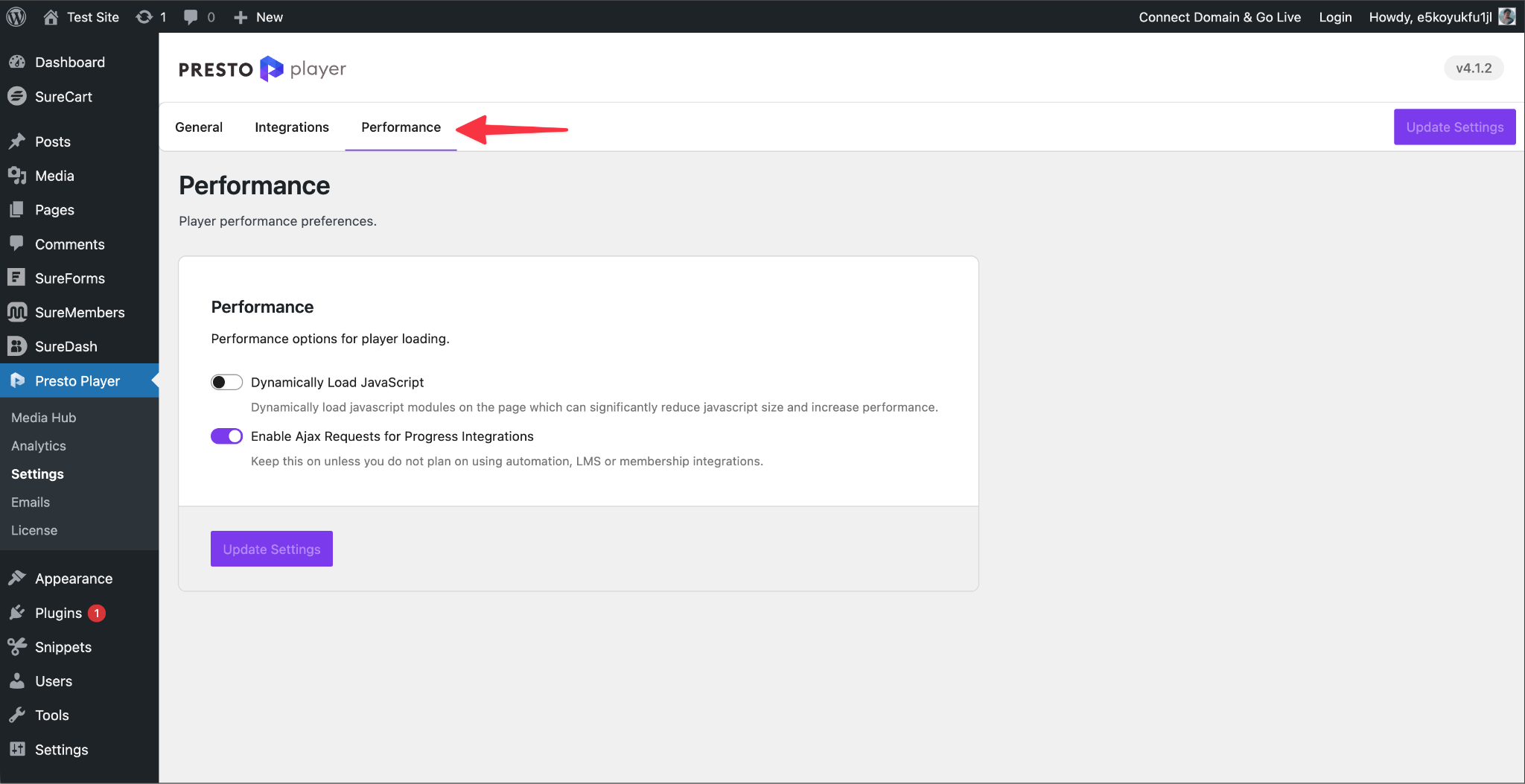
Available Settings
Dynamically Load JavaScript
When enabled, Presto Player loads its JavaScript only when it is needed, instead of loading everything upfront. This can:
- Reduce the total JavaScript loaded on a page
- Improve page load scores in performance testing tools
Things to be aware of:
- Some caching setups or CDNs may not work well with dynamic loading
- Behavior can vary depending on your hosting environment
If you notice videos not loading correctly after enabling this, you may need to adjust your cache or CDN settings.
Enable Ajax Requests for Progress Integrations
This controls how video progress is tracked for integrations. Keep this enabled if you use:
- Automations
- LMS platforms
- Membership plugins
Only disable this if you do not use any progress-based integrations.
Individual Video Performance Options
These settings are applied per video. You can find them on the Edit Video page from the Media Hub.
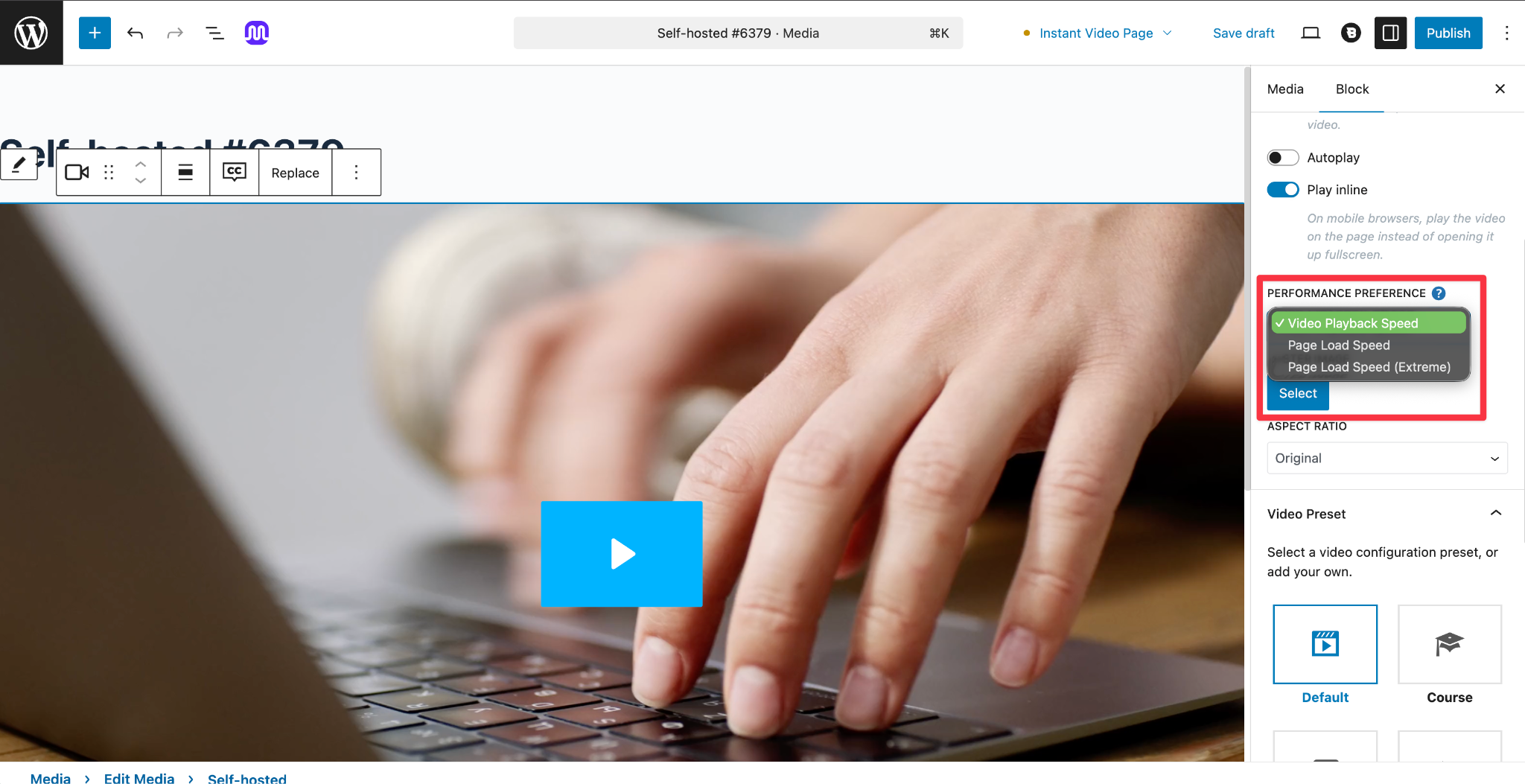
These options are automatically handled for:
- YouTube videos
- Vimeo videos
They mainly apply to:
- Self-hosted videos
- Bunny.net videos
Why These Options Exist
Every element on a page adds something that needs to load. Videos are no different. These settings let you choose whether to prioritize:
- Faster video playback
- Faster page load time
- The lightest possible page load
There is no single best option. The right choice depends on where the video appears.
Performance Preference Options
Each video has three performance modes.
Video Playback Speed
- Loads part of the video as the page loads
- Minimizes delay when the viewer clicks play
- Best used when the video is the main focus of the page, or you expect users to watch immediately, such as in online courses
Page Load Speed
- Loads only the poster image and basic metadata
- The video itself loads when the viewer presses play
- Best used when the video supports the page but is not the main focus, such as on a homepage or landing page
Page Load Speed (Extreme)
- Loads nothing on page load
- No poster image or video data is loaded until interaction
- Best used when you want the smallest possible page load, or the video is secondary and may not be watched by most visitors
Choosing the Right Option
Performance is always a trade-off. For example:
- A course lesson usually benefits from Video Playback Speed
- A homepage video often works better with Page Load Speed
- A rarely watched video may benefit from Page Load Speed (Extreme)
Visitors often care more about how fast a page feels, while performance tools focus on how much is loaded. These settings help you manage that balance.
Settings That Can Affect Performance
Some features naturally increase page size because they load video data earlier. For example:
- Autoplay loads video content as soon as the page opens
- Muted autoplay still counts as loading video data
This can increase page size in performance testing tools, even if the page feels fast to real users. In some cases, the engagement benefit of autoplay may outweigh the performance cost. This is a choice you can make per page.
Conclusion
Presto Player gives you control over how video-related files load, both globally and per video. Use global settings for site-wide adjustments, and individual video options to fine-tune specific pages based on how important the video is to that page’s experience.
We don't respond to the article feedback, we use it to improve our support content.