
- How to Create a Presto Popup
- Video Presets
- Video Security
- Performance Preferences
- Video Settings
- Shortcodes
- Capture Emails
- Audio
- Video / Audio Timestamps
- Playlists
- How to Use Instant Video Pages in Presto Player
- Automatic Video Syncing
- Dynamic Watermark
- Video Presets
- Automatic Captions in Presto Player
- How to Use Video Presets in Presto Player – Layouts and Behavior
- How to Customize Video Presets – Settings and Layout Options
- How to Use Shortcodes in Presto Player
- How to Use Advanced Shortcodes and Timestamps
How to Control Video Playback – Video Settings
Video Settings let you control how each individual video looks and behaves. These settings apply only to the selected video and do not affect other videos on your site.
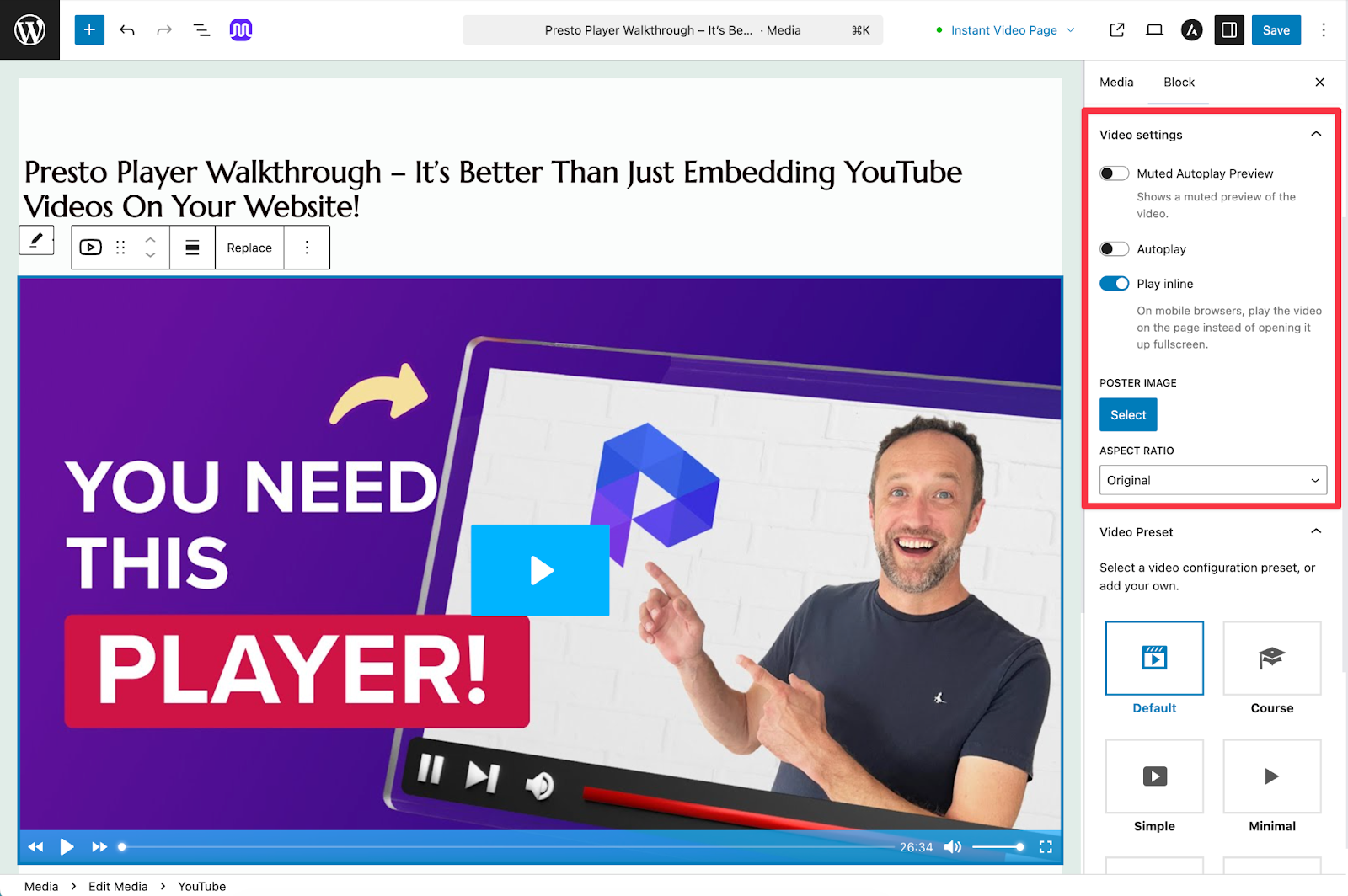
You can adjust Video Settings directly in the Presto Player block or when editing videos inside the Media Hub. This page explains the most commonly used options and when to use them.
Where to Find Video Settings
The settings for each video can be found on the right-hand sidebar on each video in the Media Hub.
To access Video Settings from the Media Hub:
- Open Media Hub
- Add a video if not yet added, or click on an existing video
- Click on the Video Block
- You will see the settings on the right-hand sidebar
To access Video Settings for a video on a specific page:
- Add a video using the Presto Player block if not already added
- Click the video block
- Click on Edit Original
- Open the block settings panel on the right
- Scroll to the Video Settings section
All options described below are available in this panel.
Autoplay Options
Autoplay controls whether a video starts playing automatically when it appears on the page.
Autoplay
When enabled, the video starts playing automatically with sound. This may not work in all browsers and can feel disruptive for some users, especially on page load, so it’s best to use this sparingly.
Muted Autoplay Preview (Pro)
This option plays the video automatically without sound. It is commonly used for preview videos or background-style videos. Captions and overlays can still be shown while the video plays.
Muted Preview Overlay (Pro)
When using Muted Autoplay Preview, you can display an image over the video before or after playback. This is useful if you want to:
- Add a visual prompt
- Show branding
- Encourage interaction before sound plays
You can choose the overlay image directly from the Video Settings panel.
Play Inline (Mobile)
On many mobile devices, videos open in full screen by default. When Play Inline is enabled, the video plays directly on the page instead of switching to the device’s full-screen player. This helps preserve your page layout and overall experience.
Browser, device, and operating system settings can still override this behavior.
Poster Image
A poster image is the image shown before the video starts playing. You may want to use a poster image if:
- The default thumbnail does not fit your design
- You want to show custom text or branding
- You need a temporary image for a campaign
Poster images are set per video.
Aspect Ratio
Aspect ratio controls the shape of the video player. Common options include:
- 16:9 for standard videos
- 1:1 for square layouts
- 9:16 for vertical videos
- 4:3 or 3:4 for classic formats
Aspect ratio can be adjusted from the Video Settings panel either on-page or from the Media Hub. For more advanced options, including global settings and code-based control, see the Aspect Ratio documentation.
When to Use Video Settings
Video Settings are best used when:
- A single video needs custom behavior
- You want quick changes without creating a preset
- You are adjusting playback or layout for one page
If you want consistent styling and behavior across many videos, using Video Presets is usually a better option.
Conclusion
Video Settings give you fine control over how individual videos behave and appear on the page. They are best suited for one-off adjustments where a video needs different playback or layout behavior. For site-wide consistency and reusable styling, Video Presets are usually the better choice, with Video Settings used as needed for exceptions.
We don't respond to the article feedback, we use it to improve our support content.